- Psychool
- Posts
- You’re not ‘too sensitive’. Your nervous system is tired.
You’re not ‘too sensitive’. Your nervous system is tired.

Faraz Ali
January 16, 2026
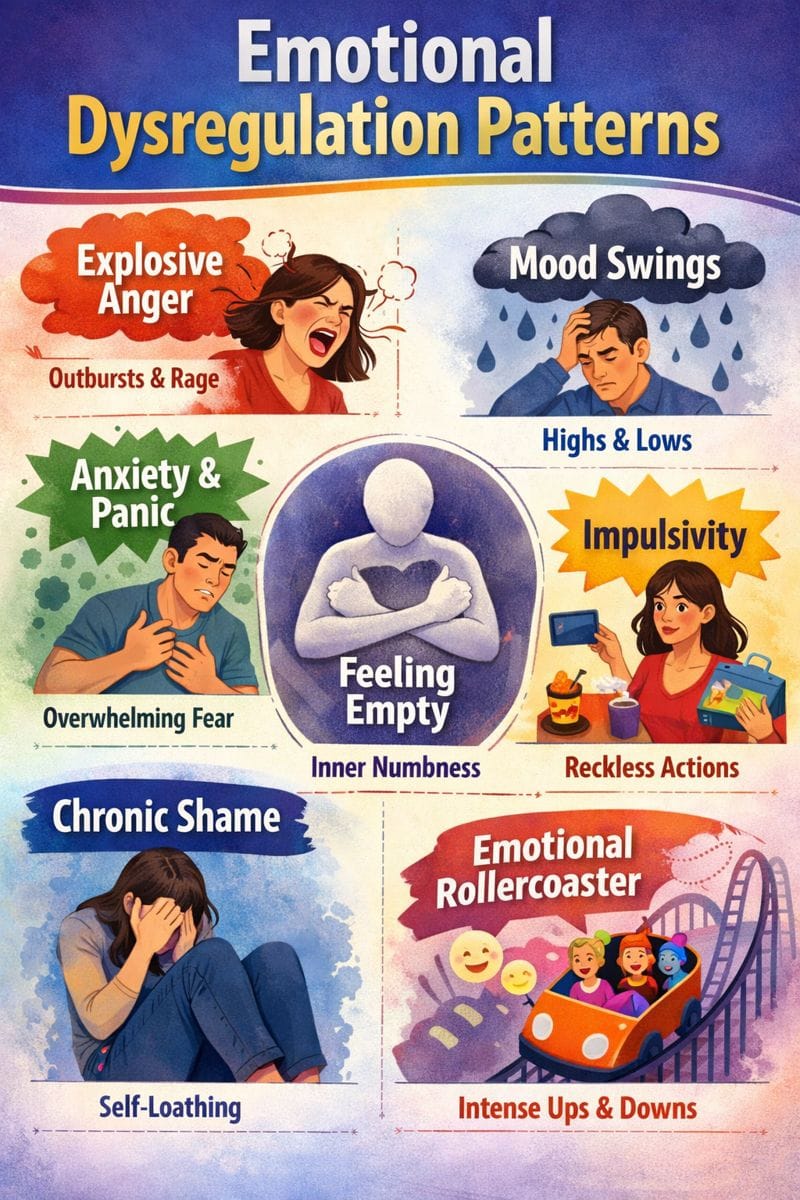
Struggling with waves of emotions that feel “too much” or “all over the place”? This newsletter post is crafted to hook people who see themselves in emotional chaos and nudge them straight into taking your Emotional Dysregulation Patterns Test.
There’s a version of you that shows up when life is calm… and then there’s the version that appears when a text is left on read, a plan changes last-minute, or someone sounds “off” in their reply.
If those shifts feel intense, fast, and hard to come back from, you might not just be “dramatic” or “overthinking” things, these can be signs of emotional dysregulation.
Here are some patterns people with emotional dysregulation commonly report:
Feeling emotions like a 0 or a 100, with almost nothing in between
Getting stuck in loops of rumination after conflict or rejection
Saying or doing things in the heat of the moment that you regret later
Struggling to calm down even when you know you’re “overreacting”
Feeling confused: “Why am I like this? This isn’t how I want to respond”
Emotional dysregulation is not a character flaw. It is a pattern in how your brain and nervous system react, which often shows up across anxiety, depression, trauma, ADHD, and personality-related issues. When you understand your own pattern, you can finally stop fighting yourself and start working with your emotional system instead.
Soft psychoeducation + tension
What most people don’t realize is that emotional dysregulation tends to follow recognizable, repeated patterns—things like:
Explode → shame → withdraw → cling
Numb out → avoid → feel empty → seek intensity
Overthink → freeze → procrastinate → panic
If you can map your pattern, you can begin to interrupt it.
That’s exactly what this assessment is designed to do.
If you read this and thought “this is uncomfortably accurate,” it might be time to stop guessing and look at your actual emotional pattern.
Inside the test, you will:
Identify which emotional dysregulation pattern shows up most in your life
See how it may be affecting your relationships, work, and self-image
Get AI-powered insights written in plain language so you actually use them in real life
The test is:
Completely online
Free to take
Designed to highlight patterns, not label you as “broken”
Hit the link, answer honestly, and read your pattern breakdown like a mirror being held up to your emotional life:
You don’t have to “fix yourself” overnight. You just have to understand your pattern. The test is the first step.
Other Recommended Tests
If emotional dysregulation resonated with you, these related assessments might help you understand the full picture:
Reply