- Psychool
- Posts
- Why You Push Love Away: The Psychology of Avoidant Attachment
Why You Push Love Away: The Psychology of Avoidant Attachment
Understand avoidant attachment and why closeness feels unsafe. Explore free science-based tests to uncover your attachment patterns and learn to build real emotional safety.

Faraz Ali
November 02, 2025
In partnership with

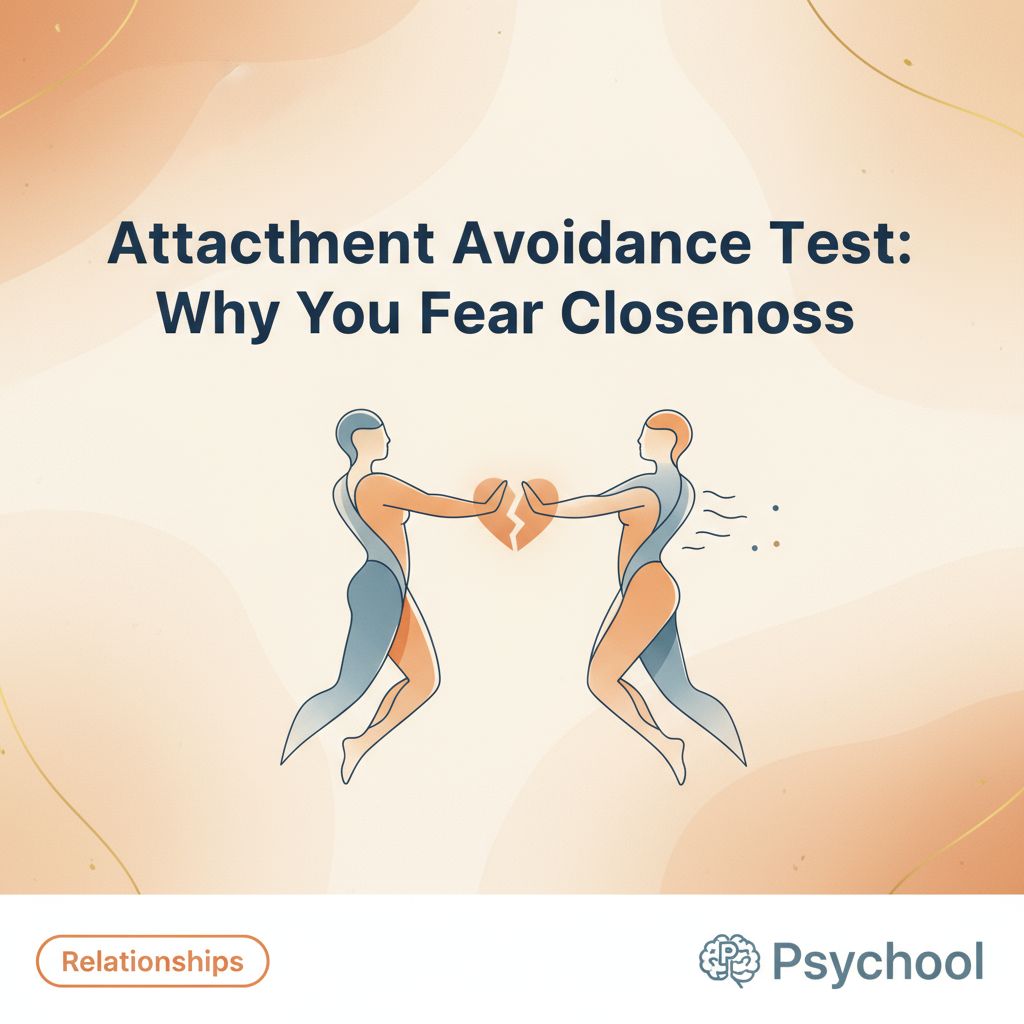
You want love. You want connection. But when someone gets close, you pull away. You tell yourself you just need space or that it’s not the right time. Yet deep down, a quieter truth hums beneath those words. Closeness feels unsafe. That feeling has a name: avoidant attachment. It is not a flaw. It is a learned defense.
Receive Honest News Today

Join over 4 million Americans who start their day with 1440 – your daily digest for unbiased, fact-centric news. From politics to sports, we cover it all by analyzing over 100 sources. Our concise, 5-minute read lands in your inbox each morning at no cost. Experience news without the noise; let 1440 help you make up your own mind. Sign up now and invite your friends and family to be part of the informed.
The Roots of Avoidance
Attachment theory teaches that how we love now is shaped by how we were loved then. When emotional closeness felt unreliable or overwhelming as a child, the mind adapted. Independence became protection. As an adult, that protection still feels like safety, even when it creates distance. You may crave connection but instinctively fear losing control.
What It Looks Like Day to Day
Avoidant attachment hides behind strength and composure. You might:
1. Feel tense when someone opens up emotionally.
2. Pull away during conflict to stay calm.
3. Prefer relationships that leave room to breathe.
4. Rationalize distance as self-respect.
5. Struggle to say “I need you.”
Avoidance feels like control, but it often comes at the cost of connection.
When Safety Becomes Isolation
The walls that once kept you safe eventually become walls that keep you alone. You may seem confident and self-reliant, yet part of you quietly wonders why love never feels easy. That confusion is not weakness. It is your nervous system trying to protect you from pain that no longer exists.
A Moment of Reflection
Think back to the last person who truly tried to know you. Did you let them in, or did you retreat when it felt too close? That pause you feel is where healing begins. Self-awareness is not judgment; it is understanding.
Understand What Your Attachment Style Says About You
If you recognize yourself here, these short, research-based tests can help you uncover what your attachment patterns are really trying to protect. Each one is private, science-backed, and takes just a few minutes to complete.
Explore your attachment style:
• Attachment Avoidance Test — Understand how you use distance to stay safe.
• Attachment Anxiety Scale — See how fear of rejection shapes your closeness.
• Disorganized Attachment Test — Discover how push-and-pull patterns form from past experiences.
• Childhood Attachment Patterns — Learn how your early bonds built your blueprint for love.
• Earned Secure Attachment — Measure your progress toward a secure connection style.
Healing the Pattern
Healing avoidant attachment is not about forcing yourself into vulnerability. It is about learning that you can be close without losing yourself. You can keep boundaries without building walls. Every time you stay open a little longer instead of pulling away, your nervous system learns a new definition of safety.
You do not have to choose between freedom and connection. Real love gives you both.
The best HR advice comes from those in the trenches. That’s what this is: real-world HR insights delivered in a newsletter from Hebba Youssef, a Chief People Officer who’s been there. Practical, real strategies with a dash of humor. Because HR shouldn’t be thankless—and you shouldn’t be alone in it.
Recommended Readings
Understanding Anxiety: Causes, Symptoms, and Effective Coping Strategies
Unstoppably Productive 8 Hacks to Boost Your Focus and Concentration
Why Do People Feel Pleasure in Others’ Misfortunes? Understanding Schadenfreude
Why You Should “Remarry” Your Partner Without Ending the Relationship
You Can Change Your Life Without Altering Your Circumstances
Reply