- Psychool
- Posts
- PTSD Does Not Always Look Like Trauma
PTSD Does Not Always Look Like Trauma

Faraz Ali
January 12, 2026
Most people imagine PTSD as something loud.
Flashbacks. Nightmares. Panic.
But for many, PTSD is quiet.
It looks like emotional numbness.
Sudden anger with no clear reason.
Avoiding people you once loved.
Always feeling on edge, even when life seems “fine.”
Trauma does not always announce itself.
Sometimes it hides inside your nervous system for years.
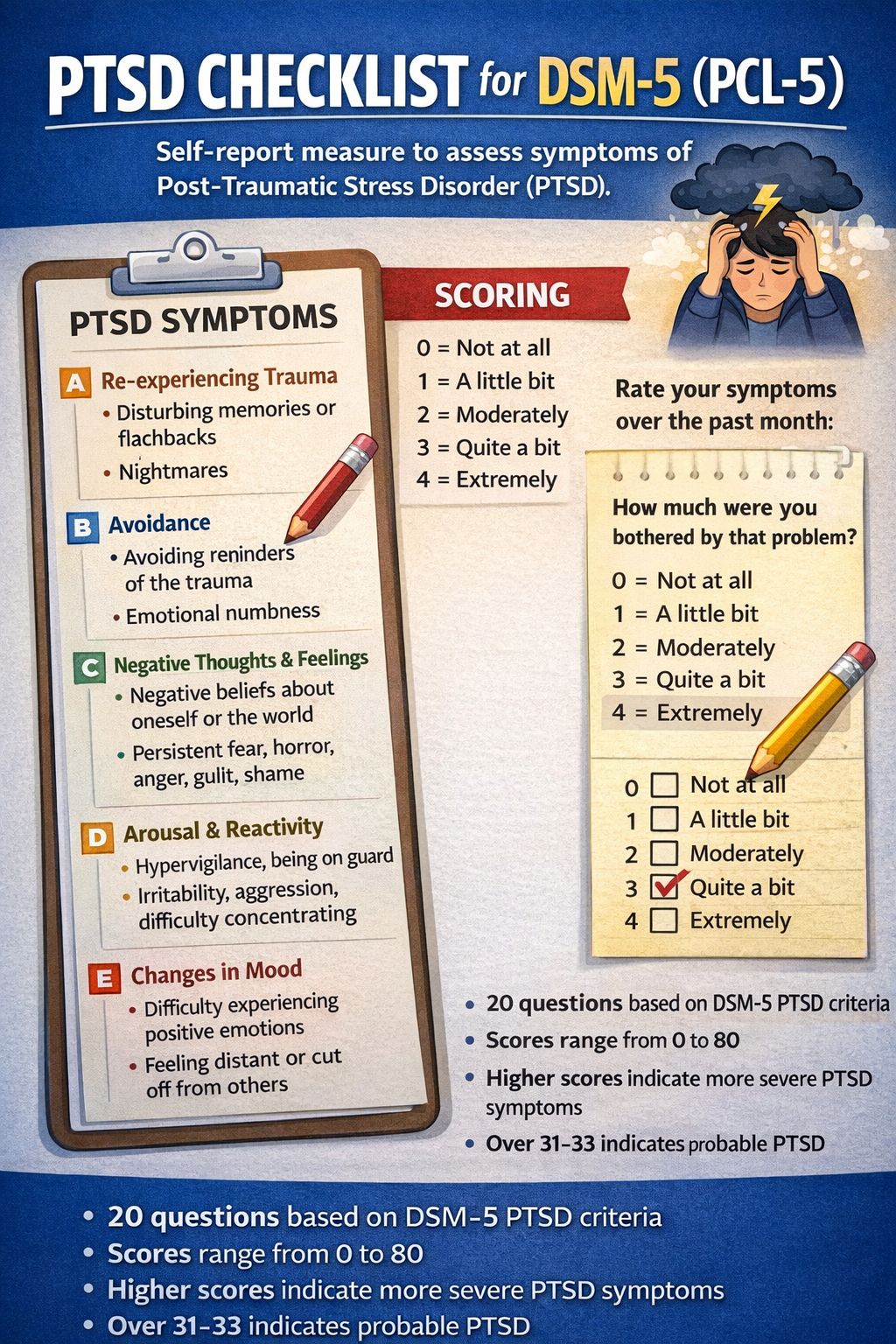
That is exactly why the PTSD Checklist for DSM-5 (PCL-5) exists.
What Is the PTSD Checklist for DSM-5 (PCL-5)?
The PCL-5 is a clinically validated self-report assessment used worldwide to measure symptoms of Post-Traumatic Stress Disorder according to DSM-5 criteria.
It helps identify four core trauma dimensions:
Intrusive memories and flashbacks
Avoidance behaviors
Negative changes in mood and thinking
Hyperarousal and emotional reactivity
This is not a diagnosis.
It is a mirror.
And sometimes, seeing clearly is the first step toward healing.
Why This Test Matters More Than You Think
Many people live with trauma without realizing it.
They blame themselves instead.
“I am just weak.”
“I should be over this by now.”
“This is just how I am.”
The PCL-5 helps separate who you are from what happened to you.
It gives language to experiences you may never have been taught to name.
How to Understand Your Results
Your score reflects symptom intensity, not personal failure.
High scores do not mean you are broken.
Low scores do not mean your pain is invalid.
Trauma is not measured by how dramatic it was.
It is measured by how deeply it changed your sense of safety.
After completing the test, you will receive:
A symptom severity breakdown
Insight into dominant trauma patterns
Guidance on next steps and support paths
Recommended Mental Health Screenings
Trauma rarely exists alone. If the PCL-5 resonates with you, consider exploring these related assessments:
Each test uncovers a different layer of the nervous system story.
A Gentle Reminder
You did not imagine your pain.
You did not fail to “move on.”
Your body adapted to survive.
Healing begins when survival is no longer mistaken for identity.
If this post resonated with you, start with the test.
Awareness is not weakness. It is courage.
Reply